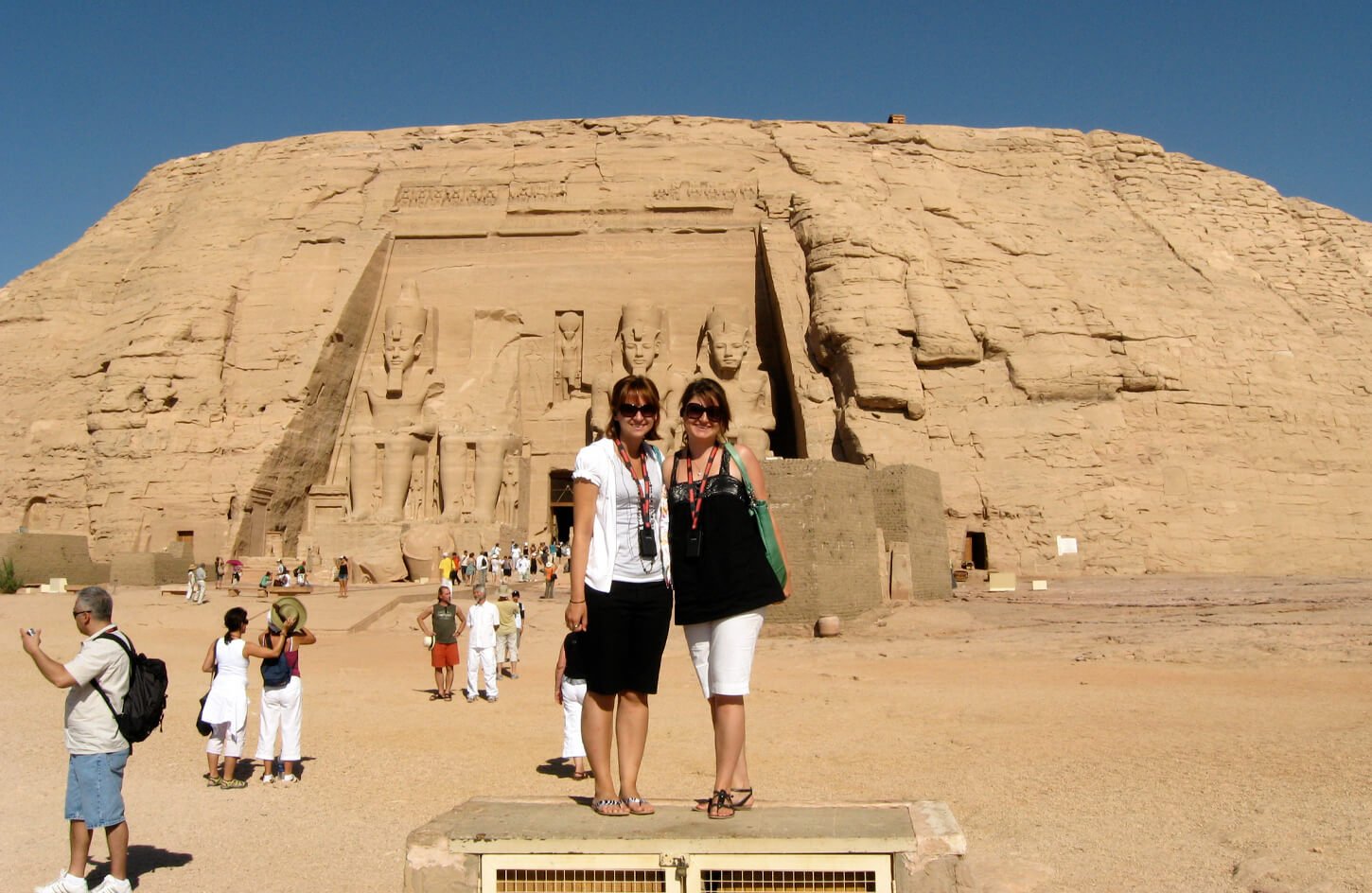
Imagine standing before a huge structure carved into the mountainside. It’s on the west bank of the Nile River in southern Egypt. The temples of Ramses II, known as Abu Simbel, are unforgettable.
They were built to celebrate a great victory. These temples show the ancient Egyptians’ skill in engineering and architecture.
As you learn about these Egyptian landmarks, you’ll discover their amazing story. You’ll see how they were moved to their current spot. Their grandeur and detailed carvings will take you back in time. They offer a peek into Egypt’s rich cultural past.
Historyczne znaczenie Abu Simbel
Exploring Abu Simbel reveals its deep impact on ancient Egyptian culture. The temples were built to honor Ramses II and his queen, Nefertari. They celebrate his victory at the Battle of Kadesh. This complex shows ancient Egypt’s grandeur and skill in building.
The temples’ construction was a huge project that showed Ramses II’s power. They were carved into the mountainside, showing the ancient Egyptians’ engineering skills. The big temple is for Ramses II, and the small one is for Nefertari. This shows how important their relationship was in ancient Egypt.
Abu Simbel’s importance goes beyond Ramses II. It marks a key moment in ancient Egyptian history. The temples are filled with carvings and hieroglyphics. These tell stories of ancient Egypt’s myths and legends, giving us a peek into their culture and beliefs.
To truly understand Abu Simbel, we must know its history. The temples honored Ramses II’s military wins and his right to rule. This made him a key figure in ancient Egyptian history.
Zrozumienie dwóch świątyń Abu Simbel
Exploring Abu Simbel reveals the rich history of its two temples. The Great Temple is a huge structure for Ramses II and the gods Amun, Ra-Horakhty, and Ptah. It’s famous for its giant statues of Ramses II, standing guard at the entrance.
The Great Temple’s front is 33 meters high and 38 meters wide. It was carved into the cliff. Inside, you’ll see huge Ramses II statues and smaller ones of his family, like Nefertari. The walls show Ramses II in battles and rituals, showing his power.
The Small Temple is for Nefertari and the goddess Hathor. It shows Nefertari’s important role in Ramses II’s time. The front has six statues, with Nefertari next to Ramses II. Inside, the carvings and paintings are still amazing today.
Both temples are amazing for their design and what they tell us about ancient Egypt. They show the religious and cultural life of Ramses II’s time. The temples’ design and the gods they honor show the complex beliefs and the royal couple’s special status.
Visiting Abu Simbel’s temples is like going back in time. You’ll see the grandeur of ancient Egypt’s pharaohs. Exploring these temples helps you understand their history and the lasting impact of Ramses II and Nefertari.
Niezwykłe uratowanie Abu Simbel
W latach 60. XX wieku świątynie Abu Simbel były w niebezpieczeństwie. Budowano Wysoką Tamę Asuańską. Tama ta stworzyła ogromne jezioro, Jezioro Nasser, które mogło przykryć świątynie.
UNESCO’s Intervention: UNESCO knew how important Abu Simbel was. They worked with countries around the world to save it. They moved the temples to a safer place, using new engineering and teamwork.
Przeniesienie świątyń było trudne. Zostały rozebrane, ponumerowane i przeniesione o 65 metrów w górę i 180 metrów w tył. Ta ogromna praca została zakończona do 1980 roku, ratując świątynie, abyśmy mogli je zobaczyć dzisiaj.
Ratunek Abu Simbel pokazuje, co możemy zrobić razem. Pokazuje, jak ważne jest chronienie naszych skarbów kulturowych. Teraz możesz zobaczyć te niesamowite świątynie i dowiedzieć się o wielkim wysiłku, aby je uratować.
Planowanie wizyty w Abu Simbel
The temples of Abu Simbel are a must-see in Egypt. With the right planning, your trip will be unforgettable. Think about how you’ll get there and when to go.
Transportation Options to Abu Simbel vary. You can fly into Abu Simbel Airport from Aswan and other cities. Or, you can drive and see Lake Nasser’s views. You can also take a boat cruise.
The best time to visit Abu Simbel is from October to April. The weather is cooler, making it easier to explore. But you’ll see more people, which can be good or bad.
Planning Tips help make your visit smooth. Book your transport and tours early, mainly in peak seasons. Also, check the temples’ hours to plan your day well.
By planning, your Abu Simbel visit will be memorable. You’ll enjoy the temples’ history, architecture, or the journey there. Your trip to Abu Simbel will be a top highlight of your Egyptian adventure.
Najlepsze czasy na wizytę w świątyniach Abu Simbel
The best time to visit Abu Simbel depends on your weather and event preferences. The temples are open all year. But the experience changes a lot based on when you go.
The weather in Abu Simbel is usually warm. But it gets very hot in summer. Winter is the best season to visit. It’s cooler, perfect for exploring the temples.
Zobaczenie Festiwalu Słońca w Abu Simbel to wyjątkowe doświadczenie. Odbywa się dwa razy w roku, 22 lutego i 22 października. W tym czasie słońce oświetla wewnętrzne posągi Wielkiej Świątyni, tworząc oszałamiający widok.
If you want to see the Sun Festival, plan your visit right. The festival itself is a big draw. But the days before and after are also great. The temples are less crowded than.
Krótko mówiąc, odwiedź Abu Simbel zimą, aby cieszyć się ładną pogodą. Lub przyjedź podczas Festiwalu Słońca, aby przeżyć coś wyjątkowego. Zaplanowanie wizyty na te czasy sprawi, że twoja podróż będzie lepsza.
Festiwal Słońca w Abu Simbel: Zjawisko odbywające się dwa razy w roku
Gdy słońce wschodzi nad egipską pustynią, Festiwal Słońca w Abu Simbel oświetla posągi wewnątrz Wielkiej Świątyni. Tworzy to niezapomniane doświadczenie. Zaraz zobaczysz zjawisko, które zachwyca odwiedzających od wieków. Pokazuje geniusz starożytnych egipskich architektów.
The Abu Simbel Sun Festival happens because of the temple’s special design. Twice a year, on February 22 and October 22, the sun’s rays enter the temple. They light up the statues of Ramses II and the gods inside. This is not a coincidence but a deliberate choice by the ancient Egyptians to honor Ramses II and the gods.
The science behind this is rooted in ancient Egyptian astronomy. The architects of Abu Simbel showed a deep understanding of astronomy. They aligned the temple with the sun’s path. This lets the sun’s rays light up the inner sanctum of the Great Temple, showing the statues of Ramses II and the gods.
Seeing the Abu Simbel Sun Festival is a unique experience. You’ll see the sun’s rays slowly light up the dark inner chamber. This moment is both calm and amazing. The festival celebrates the rich cultural heritage and astronomical knowledge of ancient Egypt.
Zrozumienie Festiwalu Słońca w Abu Simbel sprawia, że bardziej doceniasz świątynie. To nie tylko cud architektury, ale okno na wierzenia, wiedzę i praktyki starożytnej cywilizacji. Gdy widzisz to zjawisko, łączysz się z historią, która sięga tysiącleci.
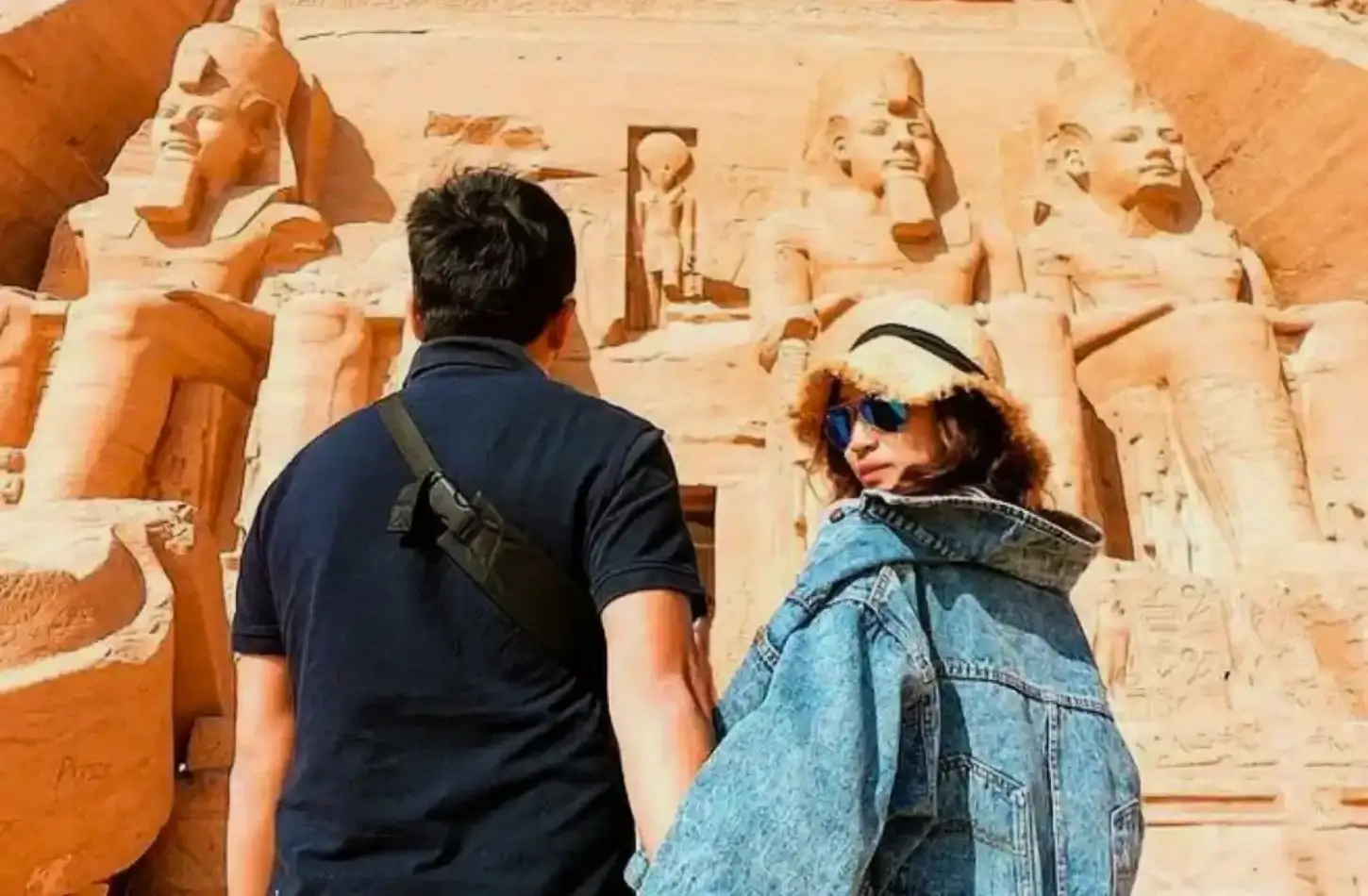
Opcje transportu do Abu Simbel
Dotarcie do Abu Simbel w Egipcie jest proste dzięki wielu opcjom podróży. Możesz polecieć z Asuanu, wybrać rejs po Nilu lub pojechać samochodem. Każda z tych dróg oferuje wyjątkowe doświadczenie.
Krótki lot z Asuanu to szybki i łatwy sposób, aby się tam dostać. Oszczędza czas i ukazuje piękno Egiptu. Wiele linii lotniczych lata tam codziennie.
Dla wolniejszej podróży spróbuj rejsu po Nilu. Rejsy zatrzymują się w wielu miejscach, pozwalając zobaczyć historię Egiptu i widoki Nilu. To świetna opcja dla tych, którzy lubią spokojnie podróżować i zobaczyć więcej miejsc.
Jazda do Abu Simbel jest dla odważnych. To dłuższa podróż, ale pozwala zobaczyć wiejskie tereny Egiptu. Musisz jednak dobrze zaplanować, ponieważ podróż jest długa.
Każdy sposób dotarcia do Abu Simbel ma swoje zalety. Możesz wybrać w zależności od tego, jak szybko chcesz jechać, co lubisz zobaczyć lub czy chcesz przygody. Dla każdego jest idealna opcja.
Podstawowe wskazówki dotyczące zwiedzania świątyń
Przed wizytą w świątyniach Abu Simbel oto kilka wskazówek. Te świątynie, zbudowane przez Ramzesa II, pokazują starożytną egipską architekturę. Są również kluczowym miejscem historycznym, które wymaga szacunku i przygotowania.
Przygotowanie jest kluczowe: Przygotuj się na pustynny klimat przed wyjazdem. Ważne jest, aby pozostać nawodnionym, więc zabierz wystarczająco dużo wody. Ubierz się w wygodne ubrania i chroń się przed słońcem za pomocą kapelusza, okularów przeciwsłonecznych i kremu przeciwsłonecznego.
Gdy jesteś w świątyniach, bądź pełen szacunku. Nie dotykaj ścian ani rzeźb, ponieważ oleje z twojej skóry mogą je uszkodzić. Możesz robić zdjęcia, ale zwracaj uwagę na wszelkie zasady, takie jak podczas specjalnych wydarzeń słonecznych.
Utrwalanie wspomnień: Robienie zdjęć to świetny sposób na zapamiętanie Abu Simbel. Aby uzyskać najlepsze zdjęcia, przyjdź wcześnie rano lub późnym popołudniem. Szukaj szczegółowych rzeźb i ogromnych posągów.
Na koniec, poświęć czas na zrozumienie historii i znaczenia świątyń. Wycieczki z przewodnikiem mogą dostarczyć interesujących faktów o Abu Simbel. To sprawi, że twoja wizyta będzie jeszcze lepsza.
Podsumowanie: Jak najlepiej wykorzystać swoje doświadczenie w Abu Simbel
Refleksja nad twoją podróżą do Abu Simbel pokazuje, że to więcej niż tylko wizyta. To szansa na połączenie się z starożytną historią i stworzenie trwałych wspomnień. Świątynie, zbudowane przez Ramzesa II, pokazują umiejętności i kreatywność starożytnego Egiptu.
To enjoy your visit, use the tips given earlier. Plan your trip for the best times and get ready for the journey. The Sun Festival, happening twice a year, is a special event. It makes the sun’s rays shine into the Great Temple’s inner sanctum.
Odkrywając świątynie, zwróć uwagę na szczegółowe rzeźby i wielkość posągów. Znajomość historii tych struktur sprawia, że twoje doświadczenie jest bogatsze. Opuścisz to miejsce z wspomnieniami, które pozostaną z tobą na zawsze.